Thursday, 20 March 2014

Marketing to Older Consumers
Aging is an inevitable trend facing the society and the response given to it affects us increasingly. With many researchers pointing to the aging population and all the benefits of targeting this age segment which include high purchasing power due to the population size, increased discretionary income and time, marketers are still not realizing the advantage of targeting this age group and those that do respond with in-appropriate marketing activities.

Marketing to older consumers
picture source: marketing to baby boomers

Older people form a massive customer base and represent a huge market for businesses, therefore, effective marketing activities targeted at this age segment should put into consideration the fact that the segment comprises of different age cohorts and each cohort is unique. For example, the Baby boomers age cohort are characterised by high education level, high income, dual career household and they are particularly tech savvy with the internet offering convenience and customization. A Large percentage of Baby boomers are also internet users, who frequent social network sites and make product purchase via the internet.  

Due to the association already in place between Baby Boomers and the use of the internet and mobile technology, this consumer groups are worth targeting but with advertising and marketing activities that portray them as healthy individual that are full of life, wealthy and adventurous.

 
Another approach to targeting the Baby Boomers age group is through Inclusivity rather than Stereotyping. This means the age cohort are particularly provided for in advertising campaign targeted at younger generations especially when it comes to online business activities.
 
Reference:
 
Hawkins, D.I and Mothersbaugh, D.L., (2013). Consumer Behaviour, Building Marketing Strategy, 12th Edition, McGraw-Hill Irwin International Edition
 
Marketing to baby boomers sourced on 21st March 2014 from the marketing Donut: resources for your business at
http://www.marketingdonut.co.uk/marketing/sales/marketing-to-older-customers
Deception in e-commerce settings
The internet is an evolving medium that is continually offering new functionalities which is creating an increase in its commercial use. This increase in the commercial use of the internet is driving consumers more into online shopping and traditional “Brick and Mortar” retailers are experiencing the showrooming effect more than ever before.
Unfortunately, with the increase in commercialisation of the internet comes an increase in the number of fraudulent practices, misleading advertisement and information misrepresentation, and common deceptive practices in e-commerce settings such as; exaggeration of product benefits and characteristics, advertisement of non-existent products and outright deception under false pretence are all variations of deceptive styles in the traditional shopping context.

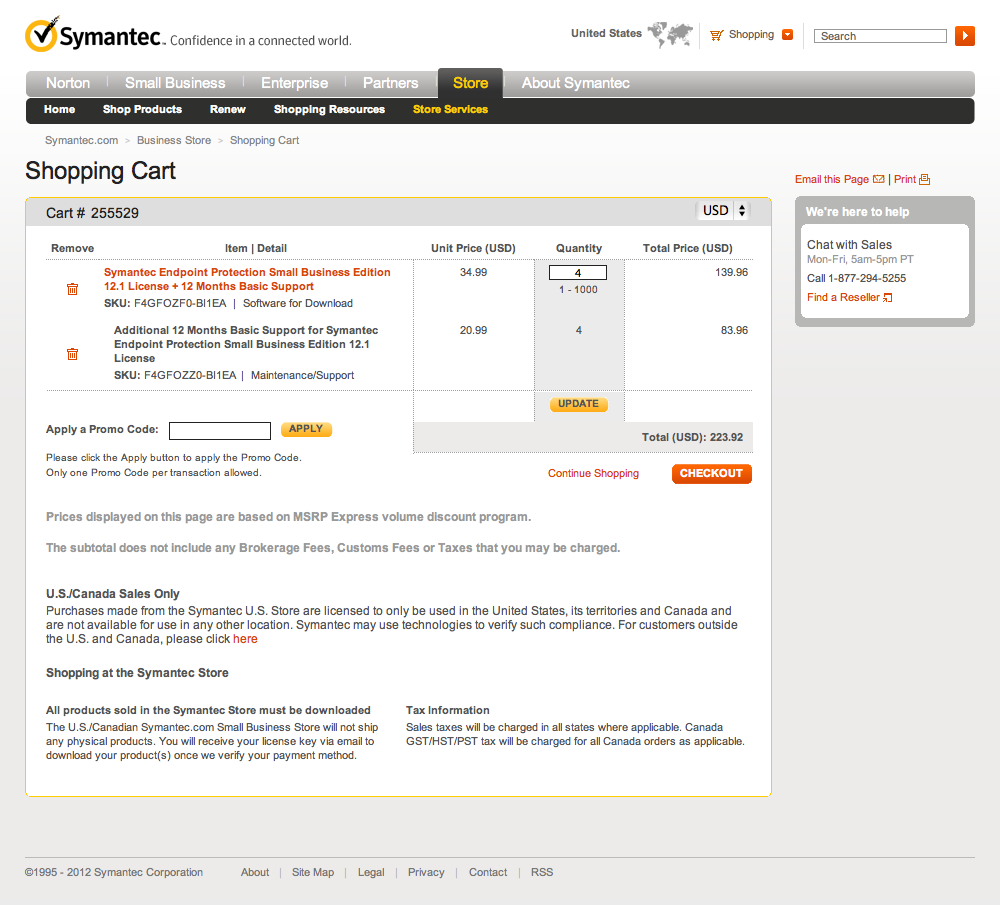
Symantec's Cart Checkout Step

Perpetrating online deception is intensified by a number of reasons which include;

·         The internet being inherently a representation environment where consumers base their decision on products on cognitive representation of reality, which is further exacerbated by the unfamiliar and impersonal nature of the web and the lack of opportunity for face-to-face interaction to detect deception.

·         The general low entry and set up cost introduced by the internet allows deceptive online retailers to set up store front that looks as genuine as a legitimate store.

·         The identities of parties involved in communications and transactions are very difficult to verify when they are done via the internet.
Though online deceptive practices affect consumers’ attitudes and behaviour, the internet still generates millions in revenue for organizations that understands how to effectively communicate their products and services to the right audience.
Reference:
Roman Sergio, (2010). Relational Consequences of Perceived Deception in Online Shopping: The Moderating Roles of Type of Product, Consumer’s Attitude Toward the Internet and Consumer’s Demographics, Journal of Business Ethics 95:373–391
 

Wednesday, 19 March 2014

Like that vase on the TV? Click your phone to buy it.
In a world where we are constantly exposed to thousands of products advertisement on a daily basis which results in clutter, marketers and advertisers are looking for a way to make advertisement perform two critical tasks of capturing attention and conveying meaning.

To combat the highly selective nature of consumers and thereby influence them to make purchase decision on a product, the advertising campaign must be targeted at the right segment of consumers and also conveyed through a medium that matches the selected target segment. One of the ways to achieve this is through product placement in entertainment media such as in movies, television programs and games.

The concept of product placement in media has been taken a step further by an American retailing company, Target Corporation, in what could signal a new era for product placement. The idea comes from a research that a large percentage of Americans watch television while using devices like Tablets and Smartphone and TV viewers are encouraged to purchase products on their mobile phone or tablets while watching a TV program which feature the product.

Though the concept looks workable, the down side is that the target consumer segment must not only be interested and followers of the television program, they must also be digitally skilled and tech savvy. The idea of stopping to buy a product on another screen may also lead to diverted attention from the actual TV program      

References: 
Sourced from The New York Times of 17th March, 2014 at:

Hawkins, D.I and Mothersbaugh, D.L., (2013)Consumer Behaviour, Building Marketing Strategy, 12th Edition, McGraw-Hill Irwin International Edition

e-business
Electronic business is the application of Information and communication technology aimed at transforming key business processes whilst the internet is the driving force of todays’ business world.

The Internet through globalisation has been able to take the World from a size Large to a size Small and at the same time helped in making the world Flat. These two concepts are summed up in the statement:

The internet is what you make out of it”

With this premonition, it is pertinent to discuss the Internet viz – a- viz  E-business, a story that would not be complete without mentioning social networks Facebook and bebo, online retailing outlet Amazon, online auction site eBay, video sharing site YouTube and web portal and search engine Yahoo and Google. All these organizations owe their success story to the Internet and its globalisation ability.


From the origin of the internet which dates back to the 1960’s through to when it became commercialized in the 1990’s and to what we have today, the story has always been that of an opportunity waiting to be harnessed by people that are critical thinkers and understand the power of value creation.

The story of the Internet has not all been blissful, there are cases of hacking into bank and compromising customers credit details, identity theft and even threat to national security. But the positive side of this is that it still takes critical thinking and understanding of value creation though in a negative way to use the internet for harmful deeds.

Reference:
The World is Flat: Tom Friedman

Images sourced from google.com

Tuesday, 18 February 2014

This is a blog focused on critical thinking in the area of electronic business